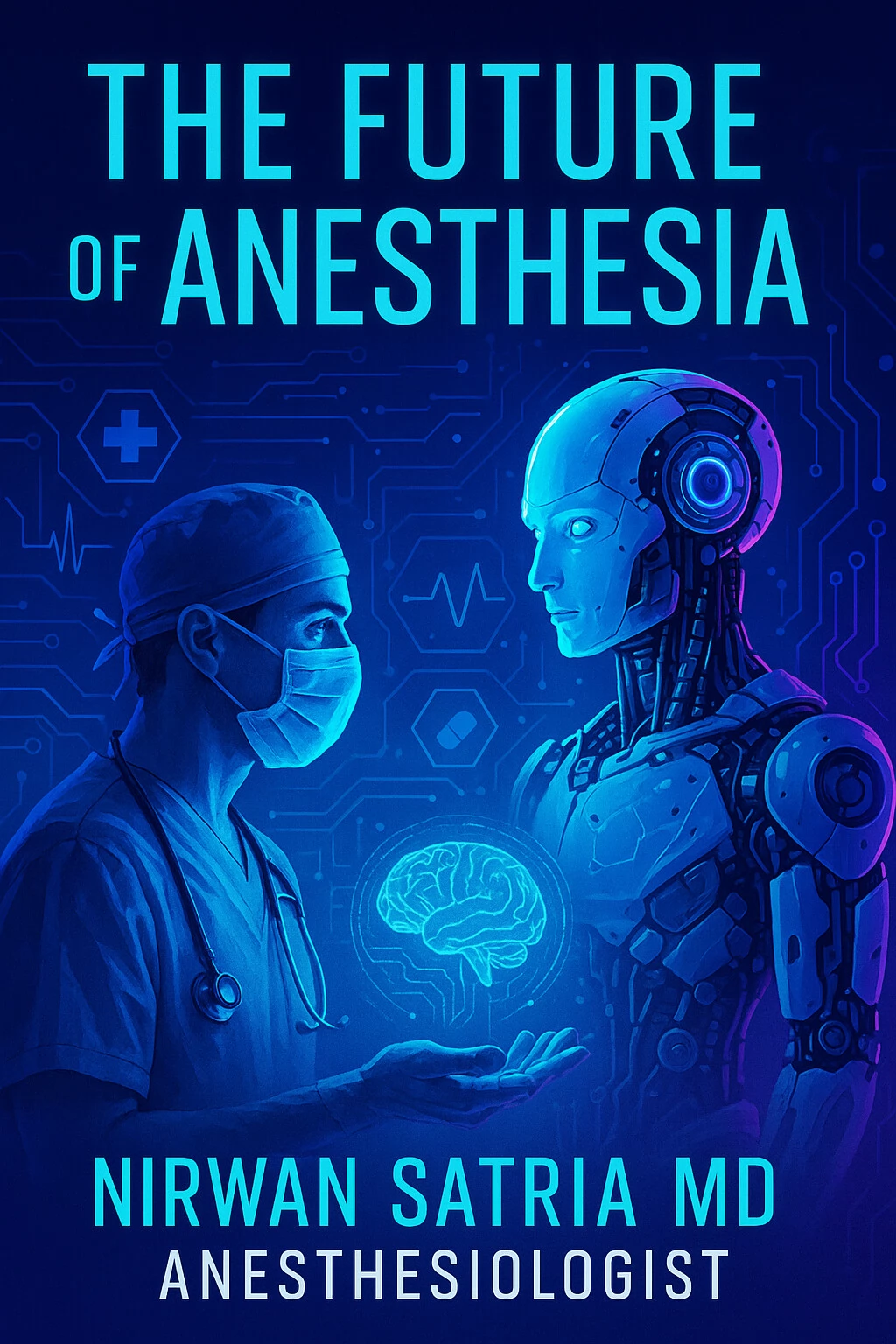
The Future of Anesthesia: An In-Depth Exploration of Emerging Trends and Innovations
Meta Description: Explore the future of anesthesia through advanced trends and innovations in Dr. Nirwan Satria’s eBook—purchase it now on Amazon!
Introduction – Why the Future of Anesthesia Matters
Anesthesia is one of the most transformative achievements in the history of medicine. From the first public demonstration of ether anesthesia in 1846 to today’s sophisticated perioperative care systems, the field has continuously evolved to make surgery safer, faster, and more comfortable for patients.
But the pace of change is accelerating. Artificial intelligence, precision medicine, non-opioid pain management, and virtual reality are no longer distant possibilities—they are already shaping operating rooms around the world. For anesthesiologists, nurse anesthetists, and perioperative care providers, staying ahead of these innovations is no longer optional—it’s essential.
That’s where The Future of Anesthesia: An In-Depth Exploration of Emerging Trends and Innovations by Nirwan Satria, MD, Anesthesiologist comes in. This insightful eBook blends deep medical expertise with forward-thinking analysis to give healthcare professionals a clear view of where anesthesia is headed—and how to prepare.
📚 Get your copy now: The Future of Anesthesia on Amazon.
The Evolution of Anesthesia: From Ether to AI-Assisted Care
A Brief Historical Perspective
Anesthesia began with simple inhaled agents—ether, chloroform, nitrous oxide—that revolutionized surgery by eliminating pain. Over the decades, advances such as endotracheal intubation, muscle relaxants, modern inhalational agents, and intravenous anesthetics refined the process.
Patient Safety as the Driving Force
The introduction of monitoring technologies like pulse oximetry and capnography in the late 20th century dramatically reduced anesthesia-related mortality. Guidelines from professional societies have standardized safe practices worldwide.
The AI Revolution in the OR
Today, anesthesia is entering the era of data-driven decision-making. Artificial intelligence and machine learning algorithms can process thousands of data points in real time, assisting anesthesiologists in predicting complications, optimizing drug dosing, and maintaining stable physiological conditions throughout surgery.
Emerging Trends in Anesthesiology
The eBook details numerous emerging trends, but here are some of the most transformative shaping the next decade:
Artificial Intelligence & Machine Learning
AI-powered anesthesia systems are not science fiction—they are being tested in operating rooms today. These platforms integrate patient data, surgical progress, and drug pharmacokinetics to recommend—or even autonomously adjust—anesthetic dosing. This could lead to fewer complications, faster recovery, and more consistent patient outcomes.
Precision & Personalized Anesthesia
Advances in genomics and pharmacogenetics are making it possible to tailor anesthesia plans to individual patients. By understanding genetic variations that affect drug metabolism, anesthesiologists can select the optimal agents and dosages for each patient, minimizing side effects and maximizing safety.
Non-Opioid Analgesia & Pain Management
With the global opioid crisis, the search for effective non-opioid alternatives is a priority. Regional anesthesia techniques, nerve blocks, multimodal analgesia, and novel agents such as liposomal bupivacaine are transforming postoperative pain management.
Enhanced Recovery After Surgery (ERAS)
ERAS protocols combine optimized anesthesia techniques, pain control, nutrition, and mobilization strategies to speed recovery, shorten hospital stays, and reduce complications. Anesthesiologists play a central role in implementing ERAS successfully.
Remote Monitoring & Tele-Anesthesia
Telemedicine has reached the operating room. Remote anesthesia monitoring systems allow experienced anesthesiologists to oversee multiple cases in different locations, improving access to expert care in rural or resource-limited settings.
Innovations That Will Shape Tomorrow
The eBook by Dr. Satria highlights a number of groundbreaking innovations:
Closed-Loop Delivery Systems
These automated systems continuously monitor patient vital signs and drug levels, adjusting anesthetic infusion rates to maintain optimal conditions without overshooting or undershooting.
Point-of-Care Ultrasound (POCUS)
Increasingly used for vascular access, airway evaluation, and real-time hemodynamic assessment, POCUS has become an indispensable tool for modern anesthesiologists.
Advanced Airway Management Tools
Video laryngoscopes, fiberoptic bronchoscopes, and AI-guided airway recognition tools are improving success rates and reducing complications during intubation.
Virtual Reality (VR) in Perioperative Care
VR headsets are being used to calm anxious patients before surgery, provide immersive pain distraction during regional anesthesia, and aid in patient education.
The Evolving Role of the Anesthesiologist
In the future, anesthesiologists will not only be responsible for intraoperative anesthesia but also for:
-
Perioperative Medicine Leadership – Coordinating care from preoperative assessment to postoperative recovery.
-
ICU & Critical Care Roles – Managing complex cases beyond the OR.
-
Healthcare Policy Influence – Advocating for patient safety, quality improvement, and ethical technology use.
Challenges Ahead & How to Prepare
Workforce Shortages
Many countries face a shortage of trained anesthesiologists. Tele-anesthesia and AI tools may help bridge the gap, but training remains essential.
Ethical Implications of AI
While AI promises efficiency, it raises questions about accountability, data privacy, and the human touch in patient care.
Equitable Access to Innovation
Cutting-edge tools must be accessible in low- and middle-income countries, not just high-resource healthcare systems.
Why This eBook is Essential Reading
Dr. Nirwan Satria’s The Future of Anesthesia combines deep clinical insight with forward-looking analysis, making it:
-
A must-read for anesthesiologists seeking to stay ahead of rapid changes.
-
An educational resource for medical students, nurse anesthetists, and perioperative nurses.
-
A discussion starter for policy makers and hospital leaders planning for the future.
Get Your Copy Today
Stay ahead of the curve in anesthesia. Learn the trends, innovations, and strategies that will define the next decade.
📖 Buy now on Amazon:
The Future of Anesthesia – Kindle Edition
Conclusion – Preparing for Tomorrow’s Anesthesia Landscape
The future of anesthesia is not a distant vision—it’s already taking shape. By embracing AI, precision medicine, non-opioid pain strategies, and new perioperative roles, anesthesiologists can ensure they remain at the center of safe, effective, and compassionate patient care.
Dr. Nirwan Satria’s eBook is your roadmap to navigating these changes with confidence and skill.